Doctoral researcher position on ticks as a feature of socio-ecological systems

Prof. Sophie Vanwambeke at the Earth and Life Institute at UCLouvain in Belgium and Prof. Patrick Leighton at the Faculty of Veterinary medicine at Université de Montréal seek highly qualified and motivated candidates for:

A doctoral researcher position on ticks as a feature of socio-ecological systems

The researcher will contribute to the project “Climat, habitat et tiques: une approche multisectorielle Une Seule
Santé pour prioriser les interventions environnementales” funded by the FNRS (Fonds National de la Recherche
Scientifique) and FRQ (Fonds de recherche du Québec) and carried out in collaboration between UCLouvain and
Université de Montréal. Contracts will be split between Belgium and Québec and based on local respective
regulations, depending on prior research experience. This offer is also published on Euraxess.

Review of applications will start on November 15, 2025.
Starting date: As soon as possible.

Objectives:

  • To monitor ticks along ecological gradients in recreational forests in the region of Montréal and Brussels
  • To analyse tick abundance data
  • To collect and analyse tick abundance data in relation to forest management in the context of climate change
  • To apply an existing population dynamic model to our study cases

Project summary:
Ticks of the genus Ixodes are the main vectors of pathogens on both sides of the North Atlantic, transmitting Borrelia spp. among others in zoonotic cycles. Many similarities exist between the Quebec and European (including Belgian) transmission systems, not only in the biology of the species concerned, but also in the ecological and anthropogenic dynamics that have determined the strength of the transmission cycles and the dynamics of the distribution area. The role of climate change on the distribution and abundance of ticks has generated much research, but many questions remain about the interactions between climate and tick habitat, making the evaluation of environmental control strategies complex. The links between vegetation and habitat must be reexamined in the context of climate change in view of the incidence of tick bites outside forests, often considered the primary habitat of ticks. Furthermore, as
management methods for forest environments and other environments such as parks and gardens evolve within the framework of resilience to climate change and the conservation of biodiversity, it is appropriate to question the effect of these practices on the abundance of ticks. Our project will therefore focus on the interaction between climate and vegetation, a fundamental question linked to tick ecology and the evolution of landscapes, but also on the question of reconciling management objectives with prevention needs. In order to achieve our objectives, we will mobilize quantitative modelling of field data as well as methods of evaluation and ranking of priorities by managers, in a multidisciplinary approach based on the One Health framework.

Profile required:
A researcher holding a MSc degree in a field relevant to the project objectives (e.g. geography, biology, epidemiology
and public health). The person recruited will have competence in statistical analysis and GIS, experience or at least
interest in carrying out field work and interacting with forest managers at various levels. The position will require the
candidate to spend time both in UCLouvain and in UdeM. The candidate should demonstrate a good command of
English, and knowledge of French will be considered a plus, and the ability to work in a collaborative environment.
Interest in disease ecology/epidemiology and the One Health approach is a must.

Work environment:
The researcher will work partly in UCLouvain, in a team working on the geography of health using a range of modelling tools and on a diversity of systems, and partly in UdeM in a team focused on disease ecology, in particular of tick-borne disease, in the context of One Health and public health. The hiring teams are respectively part of the Earth & Climate research centre, Earth & Life Institute (UCLouvain, Louvain-la-Neuve, Belgium), and Faculté de médecine vétérinaire, Université de Montréal.

Candidates should submit a cover letter detailing motivation to pursue a PhD, qualifications and research interests,
detailed CV, and names and contacts of two referees to:
Prof. Sophie Vanwambeke – sophie.vanwambeke@uclouvain.be

Download the full call: LINK

PhD position: Spatiotemporal Dynamics of Disease Vectors

PhD position open at CIRI, Lyon, France

“Understanding host-pathogen interaction processes that control Orthonairovirus transmission”

Date of publication: 30th October 2025
Deadline for application: 31st January 2026

The team HEAL – Hepatotropic and Emerging Agent Laboratory – at CIRI is welcoming applications from
enthusiastic and independent PhD candidates to start research projects on the cellular and molecular aspects
of “Orthonairovirus: molecular determinants of transmission”. Orthonairovirus are emerging, tick-borne
viruses such as the Crimean-Congo Hemorrhagic Fever Virus. In humans, CCHFV causes a hemorrhagic
disease with a 30% mortality rate and is classified as a BSL-4 virus. In animals (including cattle, a natural host
of the virus) infection is asymptomatic. We have identified host factors from bovine and human with
differential activity against CCHFV. The aim of the PhD candidate will be to understand how CCHFV is
affected by these host factors and unraveled the molecular basis explaining the difference observed between
the bovine and human orthologs. Using different approaches (such as cellular biology, molecular biology,
microscopy, cytometry, western blot, RT-qPCR) identified host factor candidates will be analyzed for their
role during CCHFV (and other Orthonairoviruses) cell entry, replication/transcription/translation and
assembly/secretion of the viral cycle.

Environment:

The host team is part of the CIRI – International Center for Infectiology Research
(https://ciri.ens-lyon.fr), in Lyon, France. The laboratory provides state-of-the-art facilities for cellular and
molecular biology, biochemistry and top-level research virology with levels 3 and 4 laboratories and animal
housing. It is located on the Campus Charles Mérieux, a research environment endowed with strong basic
biology sciences and a particular dedication to research on infectious diseases. The lab has cofounded the
LabEx (Laboratory of Excellence) Ecofect (http://ecofect.universite-lyon.fr/) on Eco-evolutionary dynamics
of infectious diseases. The host lab has a particular interest in translating its basic science discoveries in
translational research in immunotherapy.

Candidates:

The applicants are expected to have a strong background in molecular and cellular biology. The
ideal candidates should be highly motivated, curious, and enthusiastic to work in a highly collaborating team.
Prior experience in molecular virology and international training will constitute an advantage. Proven ability
to identify research objectives and meet agreed deadlines, self-motivation, flexibility, and assistance to other
ongoing research work is essential. Excellent written and communication skills in English are required.

Application:

Candidates are invited to contact Vincent LEGROS (vincent.legros@ens-lyon.fr) for further
details. Please send an application with the following:

  • Cover letter
  • Concise summary of previous activities
  • Curriculum vitae including contact details for 2-3 referees

Recent publications related to the position:

– Gautam et al. 2024. The PACS-2 protein and trafficking motifs in CCHFV Gn and Gc cytoplasmic domains
govern CCHFV assembly. Emerging Microbes and Infections
– Ritter et al. 2024. The low-density lipoprotein receptor and apolipoprotein E associated with CCHFV particles
mediate CCHFV entry into cells. Nature Communications
– Freitas et al. 2022. Crimean-Congo hemorrhagic fever: a growing threat to Europe. Comptes Rendus Biologies
– Freitas et al. 2020. The interplays between Crimean-Congo helorragic fever virus (CCHFV) M segment-
encoded accessory proteins and structural proteins promote virus assembly and infectivity. PLoS

Download the full call: PhD CCHFV CIRI 2025

PhD position: Spatiotemporal Dynamics of Disease Vectors

PhD position: Spatiotemporal Dynamics of Disease Vectors

National Institute for Public Health and the Environment

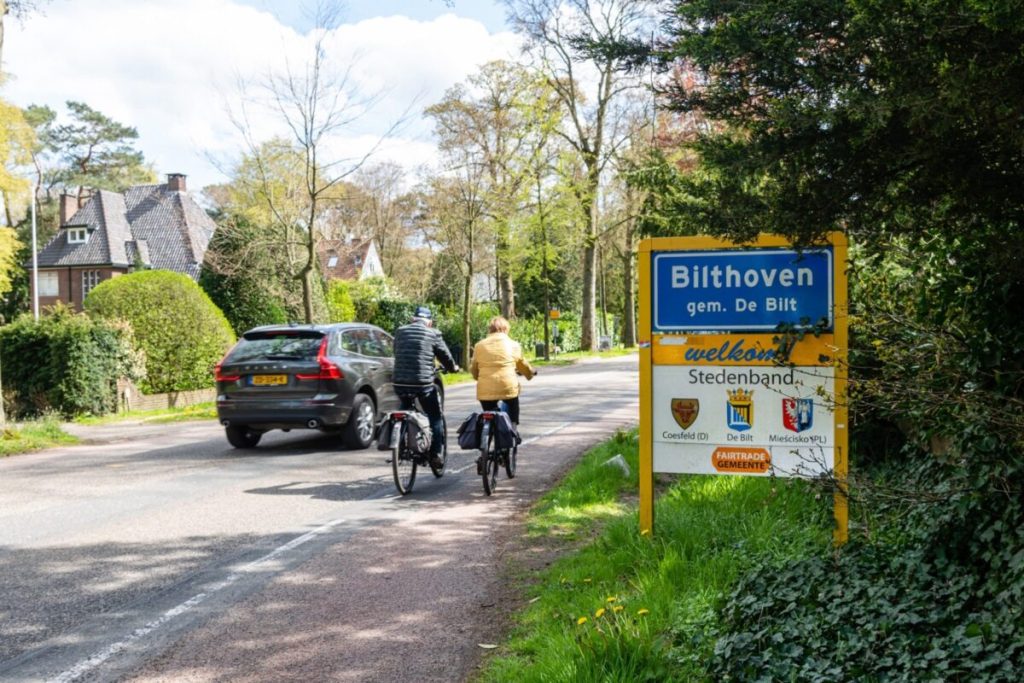
Place of position: Bilthoven, the Netherlands
Duration of contract: 48 months
Hours per week: 36
Entry level: Master / doctoral

Job description:
Are you ready to unravel the intricate dynamics of ticks and mosquitoes, contributing to groundbreaking research at RIVM? As a PhD candidate in Zoonoses and Environmental Microbiology, delve into the complexities of vector-borne diseases, bridging scientific curiosity with real-world impact. At RIVM, over 2400 colleagues collaborate daily to contribute to tomorrow’s healthcare. The Zoonoses and Environmental Microbiology Center, part of the domain of infectious diseases and vaccinology, aims to analyze and monitor the health of the Netherlands in the field of infectious diseases. In the Animal & Vector department (A&V), approximately 30 colleagues work on detecting and combating zoonoses (diseases of animals that are transmissible to humans). It’s a self-directed, international, and professional team characterized by expertise and respect for each individual’s input and personal values.

Purpose of the Position:
As a result of climate and environmental changes, the risks of diseases transmitted by ticks and mosquitoes are evolving. Due to the fluctuating populations of these vectors, their distribution and risks for humans are challenging to measure. We are seeking a PhD candidate/Researcher who, using the latest DNA techniques, can map the population dynamics and distribution of both ticks and mosquitoes. By combining this information with genetic data of pathogens like the Borrelia bacterium and the West Nile virus, our goal is to better understand the spread and public health risks. This enables us to predict the effects of climate change and adaptation on the occurrence of vector-borne diseases.

Roles and Responsibilities:
You will participate in a 4-year scientific PhD trajectory focusing on the prevalence of ticks, mosquitoes, and their pathogens in various European habitats. The project aims to contribute to the improvement of monitoring emerging vector-borne infections, such as Lyme disease and West Nile fever. Your tasks include collecting ticks and mosquitoes through fieldwork, obtaining information about their pathogens and genetics using the latest DNA techniques in the laboratory. You will conduct various
population-genetic and bioinformatics analyses to make statements about the spread of vector-borne diseases. Presentation of findings at scientific meetings and in articles is part of the role. Collaborating closely with RIVM and Wageningen University (WUR), where the PhD position is located, is essential. Over time, you will independently initiate research and maintain contacts with (international) partners. You will undergo training at WUR to facilitate your Ph.D. completion. You will have the flexibility to determine your workplace, either at RIVM or WUR, with an estimated split of 50/50.

Please click on the following link for more details and application: Spatiotemporal Dynamics of Disease Vectors

Tenure Track Faculty Position – Lyme and Tickborne Diseases Research and Education Faculty

Johns Hopkins University: Bloomberg School of Public Health: W. Harry Feinstone Department of Molecular Microbiology and Immunology

Location:
Baltimore, MD, 21205

Open Date:
Oct 15, 2023

Description

The recently established Lyme and Tickborne Diseases Research and Education Institute (LTBDI) in the Department of Molecular Microbiology and Immunology in the Johns Hopkins Bloomberg School of Public Health invites applications for a full-time, tenure track research and teaching faculty position. We are seeking a candidate engaged in laboratory-based research on tickborne diseases, including but not limited to research on ticks, including tick-environment interactions, the microbiology of tickborne pathogens (including pathogen biology, genetics, pathogenesis and detection of viruses, bacteria and/or parasites that can affect public health), as well as host defense, including immunology, vaccinology and host genetic and epigenetic impacts on tickborne diseases.

The LTBDI is embedded within the Department of Molecular Microbiology and Immunology, which also hosts the Malaria Institute. Over 50 faculty are engaged in the broad range of research on infectious diseases and its impact on public health. Excellent collaboration opportunities exist within the Department and throughout the top ranked Schools of Public Health, Engineering and Medicine. Faculty have access to functional research space and state-of-the-art core facilities, as well as newly constructed ABSL2/3 research space and a “tickery”. Faculty work with a cadre of outstanding trainees, including undergraduate and graduate students attending a variety of departmental-based and interdisciplinary graduate programs. Please visit https://publichealth.jhu.edu/departments/molecular-microbiology-and-immunology

Qualifications

We are seeking to hire at the Assistant Professor level. The individual must hold a doctoral degree (e.g., PhD, MD, DVM), documented post-doctoral research training, including publications in any of the above areas, as well as a desire to advance public health, and a passion for contributing to the educational mission of the LTBDI and the department. Successful candidates will demonstrate a solid record of scholarship, the potential for developing an independent, extramurally-funded research program, and strong skills with which to contribute to advancing the field of tickborne diseases and its teaching. Candidates must be committed to fostering principles of justice, equity, diversity, and inclusion throughout their research, teaching, and mentoring activities. They will also embrace conducting collaborative science including within the LTBDI to support our goals for the institute to become a leader in tickborne diseases research and education and to positively impact public health.

Application Instructions

We will receive applications beginning on October 15,2023 and continue until the position is filled. For full consideration, applications should be submitted before December 15, 2023. Applications must be submitted using Interfolio http://apply.interfolio.com/133621 and include: Cover letter addressed to David J Sullivan, MD, Chair of Faculty Search Committee, Curriculum Vitae, a 2 page statement outlining research, a half page statement of teaching interests, and names and contact information of three references. In addition, applications should include a statement of demonstrated commitment to the principles of inclusion, diversity, anti-racism, and equity (IDARE) in scholarship, teaching, policy, and practice, and ways to continue to foster and promote these principles as a member of the Bloomberg School faculty.

Post-doctoral fellow in tick-borne pathogens research

To revitalise tick-borne infections research in the Clinical and Applied Virology group (Dr Judith Hübschen) within the Department of Infection and Immunity, we are looking for an early stage post-doctoral fellow in tick-borne pathogens research.

Contract type: 2-year fixed-term contract
Work hours: Full-Time
Location: Esch-sur-Alzette, Luxembourg
Start date: November 2023

Please click on the following link for more details and application: POST-DOCTORAL FELLOW